Utility Bill Audit Guide
November 17, 2026 · @Adam Burdick
Utility bills are one of the most overlooked places a property loses money. Most errors are not hidden; nobody is looking. This guide walks through six checks you can run in an afternoon.
What to gather
- 12 months of bills for every account (electric, gas, water, sewer, trash)
- A list of every meter and what it serves (common area, vacant units, amenities)
- Your RUBS or submetering invoices for the same 12 months
- A current rent roll with move-in and move-out dates
Check 1: Rate class
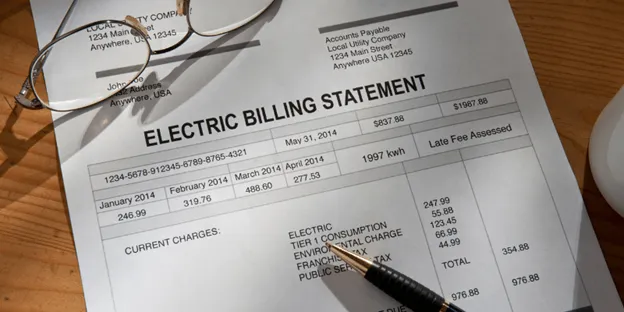
Every bill lists a rate or tariff code. Confirm it matches how the property should be classified. Residential properties are sometimes billed at commercial rates after a meter change, an ownership change, or a utility system update. We have seen this happen on a property that paid the wrong rate for years before anyone noticed.
Look for: a rate code you don’t recognize, or one that changed during the year.
Check 2: Vacant unit meters
When a unit is vacant, the owner pays its utilities. When a resident moves in, service should transfer to them. If the transfer doesn’t happen, you keep paying.
Look for: occupied units still billed to the property. Match meter accounts against the rent roll.
Check 3: Meters you can’t identify
List every meter on every bill. If nobody can say what a meter serves, find out. It could be a demolished building, a neighbor’s service, or a duplicate account.
Check 4: Usage spikes
Put 12 months of usage (not dollars) for each account in a simple table. Compare each month against the same month last year, not against a flat annual average — this accounts for seasonal swings like summer irrigation and winter heating that would otherwise look like a false alarm. A sudden jump in water usage often means a leak or a running irrigation system. A jump in common-area electric can mean lights left on around the clock.
Look for: any month more than 20% above the same month in the prior year.
Check 5: Reimbursement leakage
If you bill residents back through RUBS or submeters, compare what you paid to what you recovered.
| Item | Amount |
| Total water and sewer paid (12 months) | $ |
| Total billed back to residents | $ |
| Recovery rate (billed / paid) | % |
Look for: a recovery rate well below what your billing method should produce, or units with no utility charge at all.
Compliance flag: many state and municipal codes require deducting common-area usage — typically 10% to 20% of total consumption — before allocating costs to residents via RUBS. Before assuming your recovery rate should reach 100%, confirm your jurisdiction’s carve-out and build it into the math above.
Check 6: Late fees and deposits
Late fees on utility bills are pure waste. Also check whether the utility is holding deposits on accounts that have a long payment history; many will refund them on request.
Worked example (illustrative)
A 120-unit property finds three issues: 4 occupied units still billed to the owner ($60/month each), one irrigation leak ($400/month for 5 months), and $1,100 in late fees over the year.
| Issue | Annual cost |
| Untransferred units | $2,880 |
| Irrigation leak | $2,000 |
| Late fees | $1,100 |
| Total | $5,980 |
At a refinance, $5,980 of NOI supports roughly $63,000 in loan proceeds (1.25x DSCR, 6.5%, 30-year amortization).
What to do next
Fix the billing errors first, then request credits from the utility for past overcharges. Most utilities will review a rate class dispute if you ask in writing.
Framework for a Utility Dispute Letter
Account number
The contested tariff or rate code
The date range in question
The requested credit amount
Want help? Goldshine Management Consulting runs a full operating expense review as part of our Refi-Ready engagement — and our Utility Audit Tracking Template gives you a ready-made workbook to run these six checks consistently, month over month.